
Bristol leads the way on heat network expansion
Bristol is set to accelerate its journey to becoming carbon neutral and reduce its dependence on gas to heat homes and businesses in central Bristol through the government’s new Heat Network Zoning initiative.
Bristol City Council is working with the UK Government to implement a heat network zone in central Bristol and will be one of seven cities to adopt the new initiative before being rolled out nationally.
A consultation on the proposed heat network zone boundary will be held over the coming months, following approval by councillors in the Environment and Sustainability Committee on Thursday, 26 March. The consultation will follow the publication by the government of the new proposed national regulations, which are expected before the end of June.
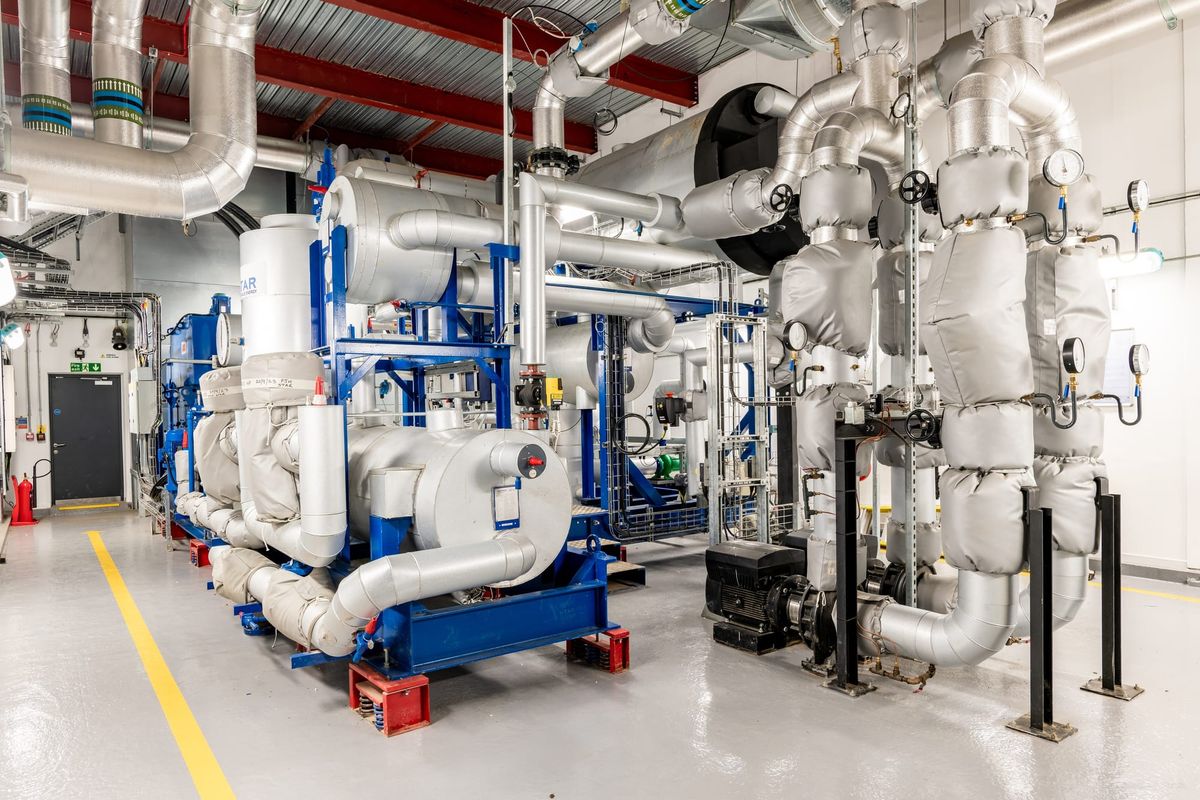
Heat networks or district heat networks are systems where heat is produced in one place and then piped to homes and businesses through insulated pipes. Instead of every building having its own boiler or heat pump, a heat network provides heat from a shared heat source, such as large heat pumps extracting heat from air, water or waste heat from industrial sites or data centres.
Councillor Martin Fodor, Chair of the Environment and Sustainability Committee, said:
Heating accounts for nearly a third of the UK’s total carbon emissions. By making use of waste heat from sources like data centres, factories and rivers, heat networks are a greener alternative to running individual gas boilers. A good example of how this works in practice is the city's award winning floating harbour water source heat pump which provides heating and hot water to 2,500 homes through the Bristol heat network.
We’re excited to be leading on this policy with the government, sharing our knowledge about heat networks and how these can be developed at scale in cities across the UK. Heat Network Zoning provides a clear roadmap for decarbonising towns and cities, with the aim of improving energy security and protecting consumers from the price volatility of fossil fuels.
The government has targets for 7% of all heat demand in England to be met by heat networks by 2035, increasing to 20% by 2050.
The introduction of Heat Network Zoning marks a major step in the UK’s transition away from fossil fuels to net-zero, identifying specific urban areas where large-scale district heating is the most cost-effective and sustainable way to heat buildings.
Zoning aims to bring certainty to building owners, building developers, and heat network developers on costs and timescales.
Zoning provides the regulatory framework and the long-term investment certainty needed to build at scale, and mitigates risks related to the construction and operation of new or expanded heat networks. This means it will be quicker, easier and less risky to build at city-scale, enabling the sector to grow and deliver on energy security and net zero commitments affordably.
Within the zone, all new buildings, large buildings (over 100MWh heat demand per year) and those with communal heating (for example, some blocks of flats) could potentially be required to connect to the heat network. The policy doesn’t apply to existing smaller buildings and individual houses.
The proposed boundary for the Central Bristol Heat Network Zone has been created, identifying 1,440 buildings that could potentially be required to connect to the heat network as it is built over the coming years. This includes some council-owned buildings.
The proposed zone is larger than the current plans of the Bristol heat network to allow for future expansion of the network. A Heat Network Zone Development Plan will be produced, providing timescales for the development of each part of the zone.
As a leader in climate action, Bristol already has successful heat networks in Redcliffe, Old Market and Bedminster, delivered through the Bristol City Leap partnership, serving the equivalent of over 13,000 homes and several public and commercial buildings.
Zoning allows the city to build on the success of the existing heat network and grow this to cover the city centre zone area, connecting more buildings to the network. The initiative will make an important contribution to the goals of the Bristol One City Climate Strategy with the aim of becoming carbon neutral.
The government introduced the Energy Act 2023, giving them powers to implement heat network zoning. The regulations are expected to be adopted later this year.
A Heat Network Zoning Authority within central government will oversee the zoning, while Zone Coordination Bodies will manage the zones locally. Bristol City Council will manage the preparation of the heat network zone until the policy comes into force and the zone area is finalised.